Winter · Birding group guide
Japan’s Winter Crane and Eagle Circuit for Birding Groups
Each winter, three of Japan’s best-known bird gatherings fall within the same few weeks. Red-crowned cranes gather at feeding grounds in eastern Hokkaido. Steller’s sea eagles hunt from drift ice off Rausu. Meanwhile, thousands of hooded and white-naped cranes winter on the Izumi plain in Kagoshima.
Together, these sites form a natural circuit for a Japan birdwatching tour in January and February. This guide serves the people who bring groups to Japan. That includes tour operators, travel agencies, birding clubs and society organisers. It then covers where groups go, when each site works, and how the logistics fit together.
Where Birding Groups Go
Tsurui and Kushiro: red-crowned cranes
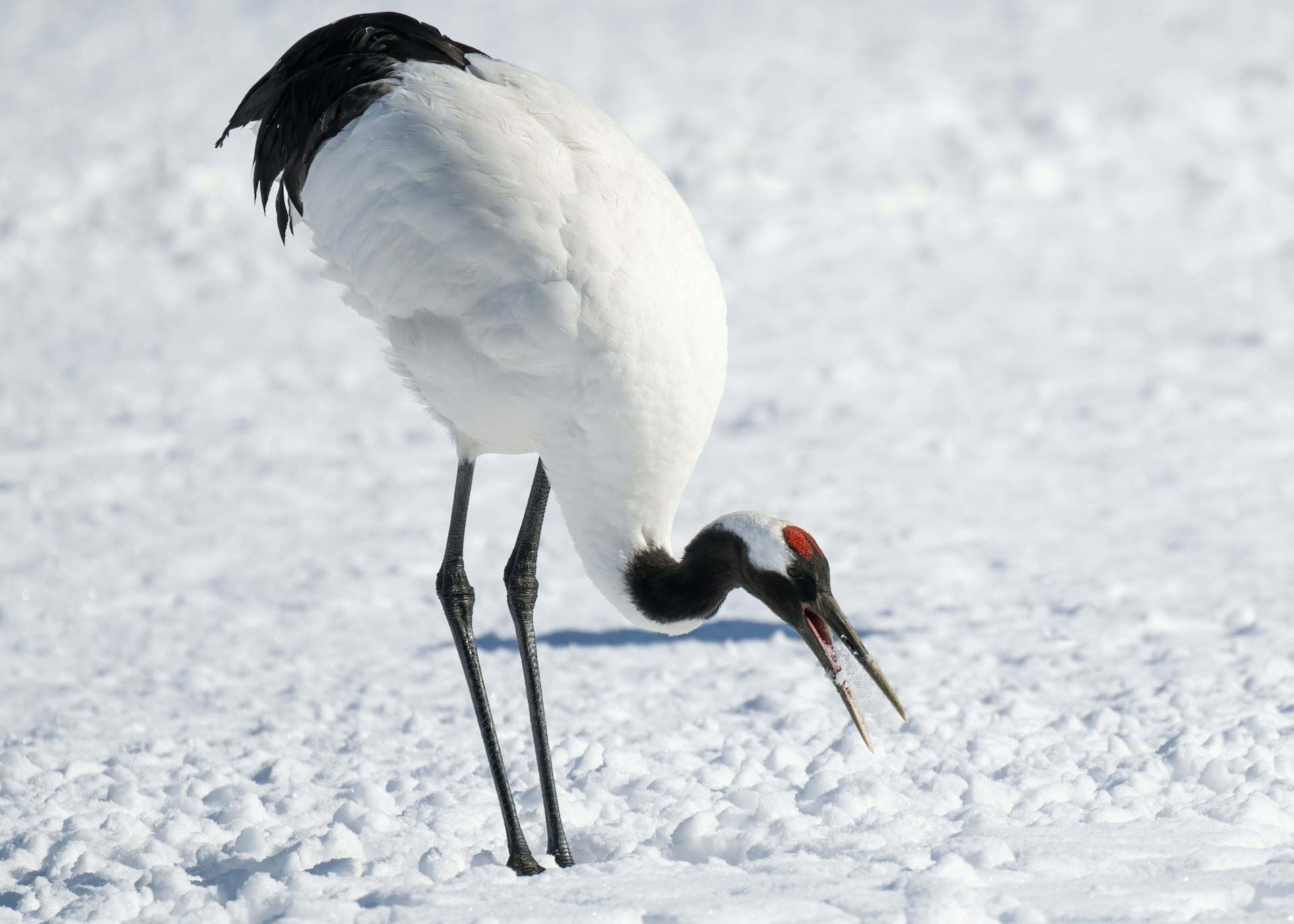
The red-crowned crane, or tancho, lives year-round in eastern Hokkaido. In winter, however, the birds concentrate at a few feeding sites near Kushiro. As a result, groups can watch large numbers at close range.
The key site is the Tsurui-Ito Tancho Sanctuary, run by the Wild Bird Society of Japan. Feeding starts in mid to late November and continues until late March. At peak season, more than 300 cranes may be present at once. The viewing area is open year-round, although it has no shelter.
The sanctuary’s nature center opens from October to March, 9:00 to 16:00. It closes on Tuesdays and Wednesdays, except national holidays, and from December 26 to January 1. Admission is free.
A second anchor is the Akan International Crane Center, known as GRUS. It opens year-round, and staff feed wild cranes at the adjacent field from November to March. Because the two sites are close together, one morning can cover both.
Many groups also start at Otowa Bridge over the Setsuri River. Here, cranes roost in the shallow water overnight. Then, at dawn, groups watch them wake, often through rising river mist. From January to early March, temperatures near the bridge can fall below minus 15°C.
Rausu: Steller’s sea eagles on the drift ice
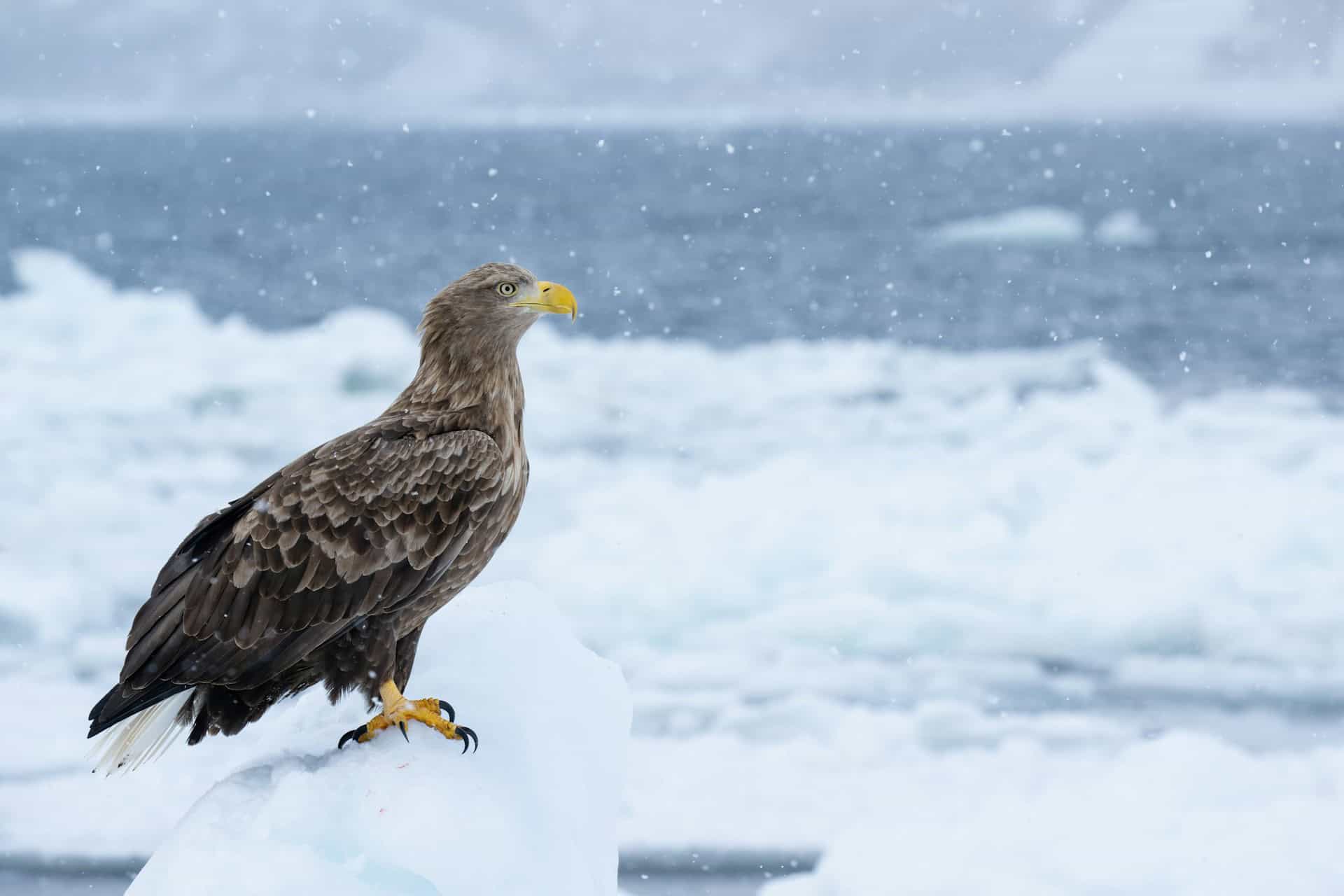
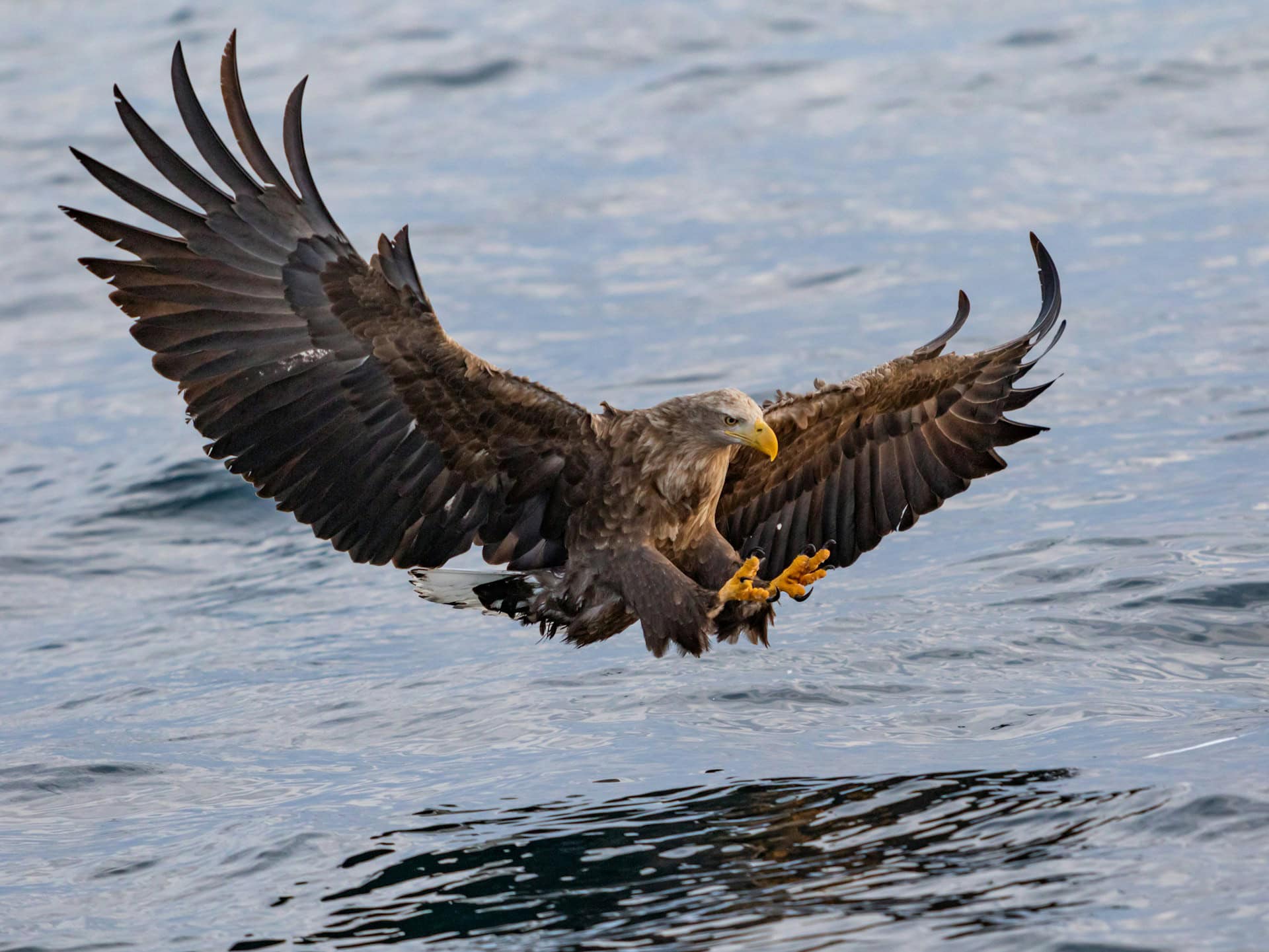
Next, the circuit moves to Rausu on the Shiretoko Peninsula, on Hokkaido’s northeast coast. From late January, drift ice reaches the shore. Steller’s sea eagles and white-tailed eagles then gather on the floes. Local boat operators take passengers out among the ice from Rausu port.
Counts vary each year. For example, one specialist operator recorded about 420 eagles in view at one time in 2022.
Izumi: hooded and white-naped cranes
Further south, the Izumi plain in Kagoshima Prefecture hosts Japan’s largest crane gathering. Japan’s Ministry of the Environment estimates the site holds about 90 percent of the world’s hooded cranes. In addition, it holds a large share of the world’s white-naped cranes. The area became a Ramsar-listed wetland in November 2021.
The Izumi Crane Observation Center opens from November to March, 9:00 to 17:00. Its closing date in March changes from year to year, so organisers should confirm it each season.
Timing by Month
Each site has its own window. Therefore, the overlap determines when the full circuit works.
- November: Izumi arrivals build up, and Tsurui feeding begins in mid to late month.
- December: Both crane sites are active. However, Rausu has no drift ice yet.
- January: Cranes peak in Hokkaido and Kyushu. Drift ice usually reaches Rausu in late January.
- February: This is the strongest month for the full circuit. The second half is generally best for drift ice at Rausu.
- Early March: Eagles may remain, but the ice can clear early. Izumi birds begin to depart.
For this reason, most organisers place the circuit between late January and late February. February is also the busiest month for visitors at Tsurui, so early booking matters.
Sample Group Route
The outline below suits a group of 10 to 25 travellers. It assumes nine days on the ground, with weather buffers built in.
- Day 1: Arrive in Kushiro via Tokyo, then transfer to the hotel.
- Day 2: Dawn at Otowa Bridge, morning feed at Tsurui-Ito, afternoon at GRUS.
- Day 3: Second crane morning as a weather buffer, then coach to Rausu.
- Day 4: Morning drift-ice cruise from Rausu port, afternoon coastal birding.
- Day 5: Reserve cruise morning, then transfer to Nakashibetsu or Kushiro airport.
- Day 6: Fly to Kagoshima via Tokyo, then continue to Izumi.
- Day 7: Full day on the Izumi crane grounds and at the observation center.
- Day 8: Second Izumi morning, then return to Kagoshima.
- Day 9: Departure.
Group Logistics
Coach, rail and air
In Hokkaido, a private coach with an experienced winter driver is the practical choice. Distances are long, and public buses to Rausu run only a few times a day. Kushiro to Rausu is about 160 kilometres, and the bus takes around three and a half hours. Nakashibetsu airport is closer, at roughly 90 minutes by bus.
Japan also tightened its rules on coach driver working hours in April 2024. Therefore, long transfer days need careful planning, and early dawn starts count towards the driver’s day.
By contrast, Kyushu is simpler. Izumi has its own Kyushu Shinkansen station. It is about 25 minutes from Kagoshima-Chuo and 80 to 95 minutes from Hakata. From the station, the crane grounds are about 20 minutes by car.
Accommodation capacity
Tsurui and Rausu are small communities, with far fewer rooms than Kushiro. Consequently, groups of more than 20 may need to split across two properties or base in Kushiro. Organisers should also settle rooming lists early, before contracting.
Site rules and group size
At Tsurui-Ito, a fixed fence line sets the viewing distance. Other visitors share the space along it, so large groups should arrive early and spread out. Otowa Bridge has a narrow footway, and more than 200 photographers can gather there on a busy morning. Groups should stay off the roadway, avoid flash and keep noise low.
On the Rausu boats, vessel capacity varies by operator. Larger groups may therefore need to split across two departures. Organisers should confirm capacity and photography equipment fees when booking.
Practical Notes
- Weather: Wind can move drift ice away within hours, so operators may cancel cruises at short notice. A spare morning protects the trip.
- Bird health: A major avian influenza outbreak killed more than 1,500 cranes at Izumi in the 2022–23 winter. Access rules can change when outbreaks occur, so plans need flexibility.
- Cold: Viewing at Tsurui and Rausu means standing outdoors for long periods. Clients need proper winter layers, and coaches should stay close by.
- Season dates: Feeding times, opening dates and cruise schedules shift each year. Consequently, organisers should confirm each of them in the autumn before travel.
Organisers planning this circuit can request a quote from Asahi Travel Group. Replies arrive within 24 hours.
Plan this trip with Asahi
Tell us your group size and dates. We reply within 24 hours.
Request a Quote← All guides