
Kanazawa Travel Guide
Kanazawa Travel Guide A samurai city of gardens, teahouses, gold leaf and fresh seafood. Best time to goApril for cherry blossoms. November to February for seafood season and winter gardens. How long to stayTwo days covers the garden, castle and […]
Kanazawa Travel Guide
A samurai city of gardens, teahouses, gold leaf and fresh seafood.
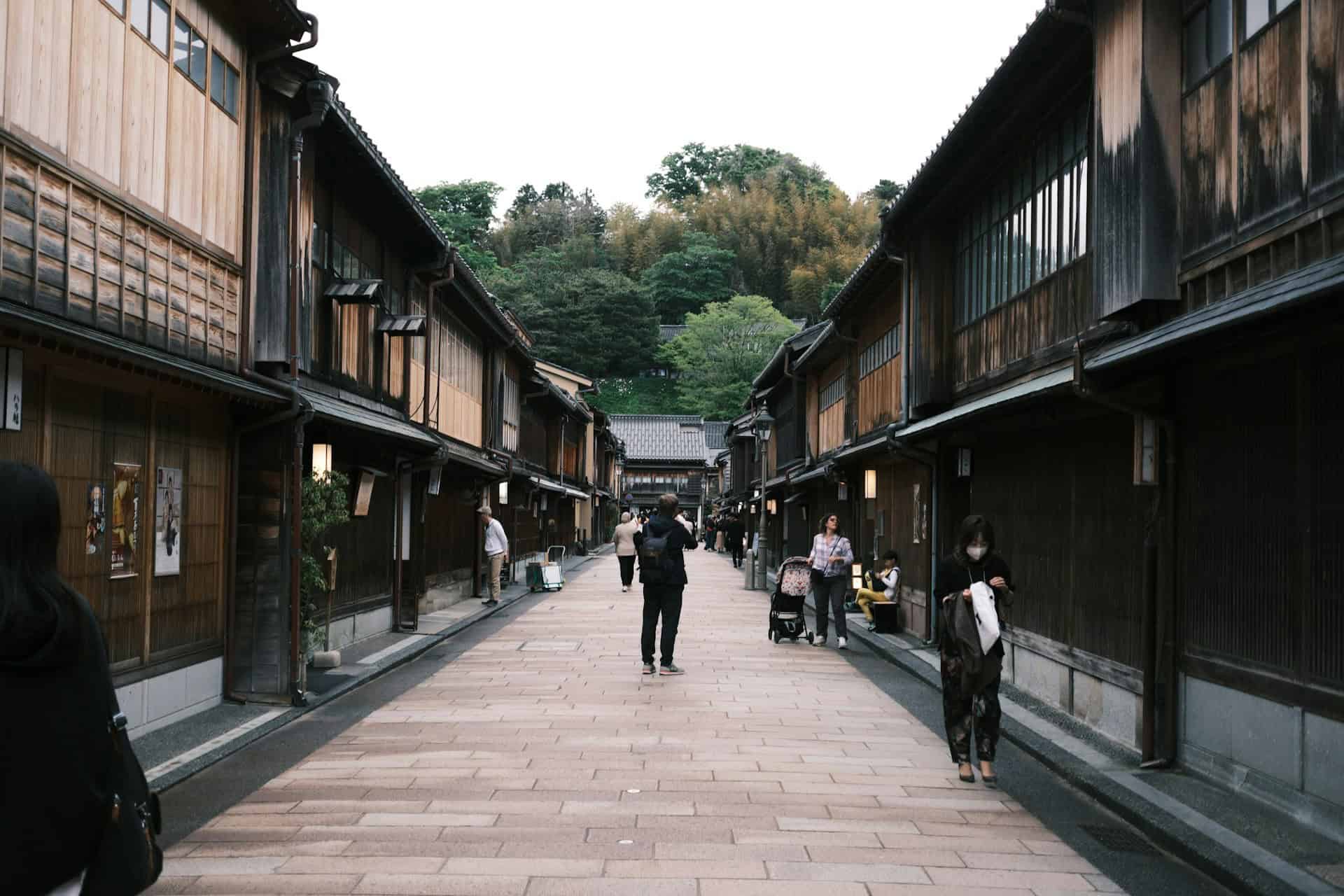
Kanazawa is one of Japan’s best-preserved historic cities. It escaped major damage in World War II, so its samurai houses, teahouses and garden survive. In addition, Kanazawa has a strong craft tradition and some of Japan’s best seafood.
This guide covers Kanazawa’s history, its garden and castle, historic districts, museums, crafts and food.
A short history of Kanazawa
From 1583, Kanazawa was ruled by the Maeda family, lords of the Kaga domain. Kaga was the richest domain in Japan after the shogun’s own lands. However, the Maeda had to avoid looking like a military threat. As a result, they invested their wealth in arts, crafts and learning instead.
Under the Maeda, Kanazawa became a center of tea ceremony, Noh theater, lacquerware, pottery and gold leaf. The city kept much of this culture into the modern era. Today, it is a UNESCO Creative City of Crafts and Folk Art.
Gardens, castle and samurai history
Kenroku-en
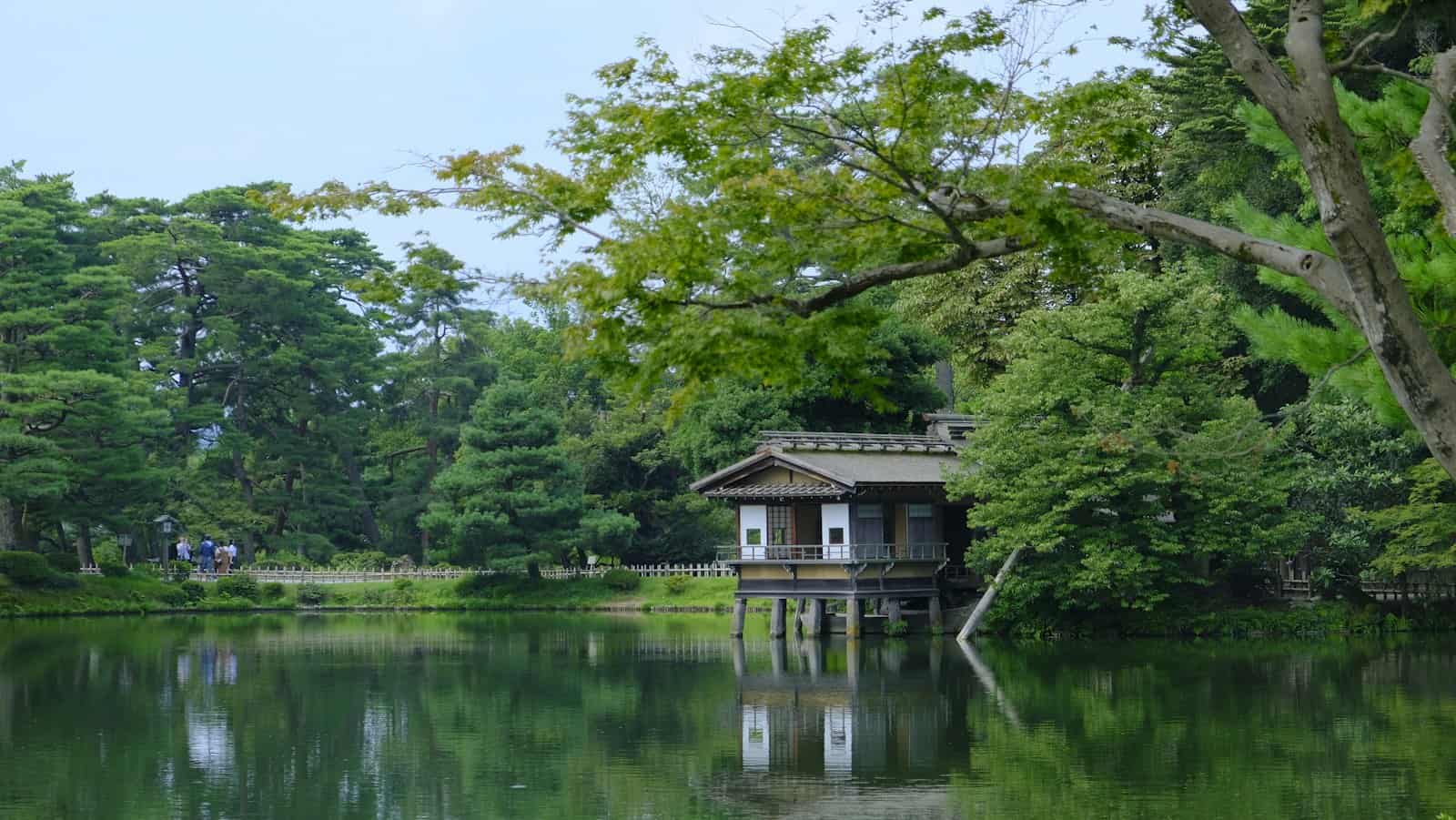
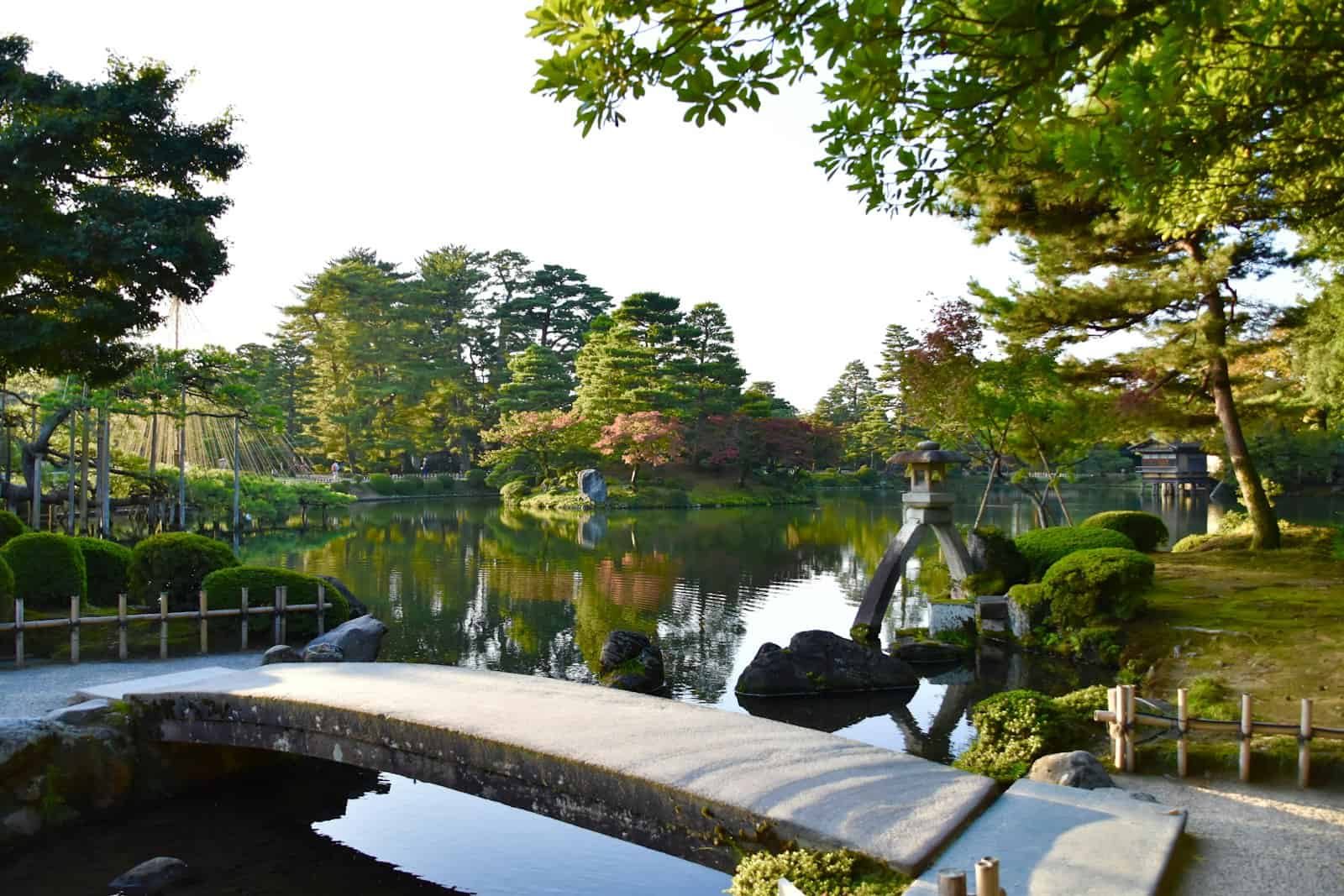
Kenroku-en is considered one of Japan’s three great gardens. It was developed by the Maeda lords over almost two centuries. Ponds, streams, teahouses and old pines create views that change with each season. In winter, ropes called yukitsuri protect the trees from heavy snow.
Kanazawa Castle Park
Next to Kenroku-en, Kanazawa Castle was the Maeda family’s seat. Several gates, turrets and storehouses have been carefully restored with traditional methods. The stone walls show different building techniques from different centuries.
Nagamachi samurai district
In Nagamachi, earthen walls and narrow lanes line the former homes of samurai. The Nomura family house is open to visitors, with a small, beautiful garden.
Myoryu-ji
Myoryu-ji is known as the “Ninja Temple”. In fact, it has no link to ninja. Instead, it was built with hidden stairways, trap doors and secret rooms for defense. Visits are by guided tour, booked in advance.
Teahouse districts
Higashi Chaya
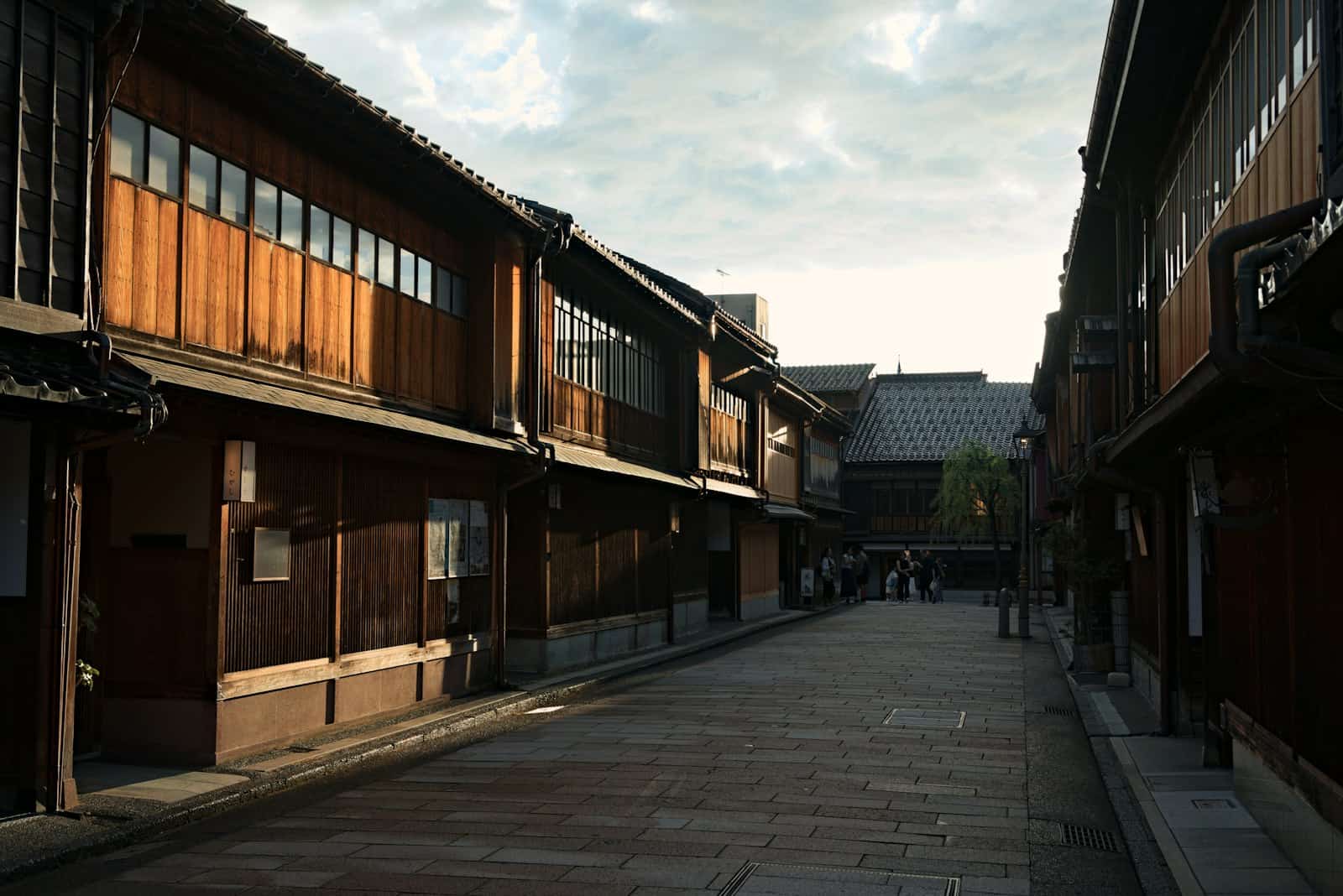
Higashi Chaya is Kanazawa’s best-known teahouse district, established in 1820. Wooden latticed buildings line the streets. Some teahouses are open to visitors, while others still host geiko performances. Shops sell gold leaf crafts and sweets.
Kazuemachi and Nishi Chaya
Kazuemachi lines the Asano River and is quieter and very atmospheric. Meanwhile, Nishi Chaya is the smallest of the three districts.
Museums and crafts
21st Century Museum of Contemporary Art
This circular glass museum opened in 2004. Its best-known work is Leandro Erlich’s swimming pool, which visitors can stand beneath. Popular galleries need timed tickets.
D.T. Suzuki Museum
This quiet museum honors the philosopher who introduced Zen to the West. Its water mirror garden is a calm place to sit.
Gold leaf
Kanazawa produces almost all of Japan’s gold leaf. You can try a gold leaf workshop, decorating a small box or chopsticks. You will also find gold leaf on soft-serve ice cream.
Food to try in Kanazawa
- Omicho Market: a busy market for nearly 300 years, with seafood bowls and fresh sushi.
- Kaga cuisine: refined local cooking, including jibuni, a duck stew.
- Snow crab: a winter specialty, typically in season from November.
- Wagashi: Kanazawa is one of Japan’s great cities for traditional sweets.
Where to stay
Stay near Kanazawa Station for easy shinkansen access. Alternatively, Korinbo and Katamachi are walkable to Kenroku-en and restaurants. A ryokan stay also pairs well with the nearby Kaga hot springs.
Getting around
Kanazawa’s main sights are within a short bus or taxi ride. The loop buses are convenient. For groups, coaches park close to the castle and garden.
Sample two-day itinerary
Day 1: Garden and castle
Visit Kenroku-en early, then Kanazawa Castle Park. After lunch, see the 21st Century Museum. In the evening, walk through Higashi Chaya.
Day 2: Samurai and markets
Start with breakfast at Omicho Market. Then explore Nagamachi and Myoryu-ji. Finally, try a gold leaf workshop.
Pairing Kanazawa with Shirakawa-go and Takayama? We plan the coach route and craft experiences. Request a quote and we will reply within 24 hours.
Kanazawa travel FAQ
How many days do you need in Kanazawa?
Two days covers Kenroku-en, the castle, the teahouse districts and the main museums.
Why is Kanazawa so well preserved?
Kanazawa avoided major damage in World War II, so many of its historic buildings and districts survive.
What is Kanazawa famous for?
Kenroku-en garden, samurai and teahouse districts, gold leaf crafts and fresh seafood.
Can you see geiko in Kanazawa?
Yes. Higashi Chaya teahouses still host performances, and some offer events for visitors.
How do you get from Kanazawa to Shirakawa-go?
Buses take about 75 minutes. Many travelers continue on to Takayama the same day.
Plan your Kanazawa trip
Private trips, group tours, school programs and incentives. Tell us your dates and ideas, and we will reply within 24 hours.