
Kyoto Travel Guide
Kyoto Travel Guide A thousand years as Japan’s capital: temples, gardens, geiko districts and food. Best time to goLate March to early April for cherry blossoms. Mid-November to early December for autumn leaves. How long to stayThree days covers the […]
Kyoto Travel Guide
A thousand years as Japan’s capital: temples, gardens, geiko districts and food.
Kyoto was Japan’s imperial capital for more than a thousand years. As a result, it holds more temples, shrines and gardens than almost any city in the world. Seventeen of its sites form a single UNESCO World Heritage listing. Yet Kyoto is also a living city of craftspeople, tea houses and family-run restaurants.
This guide covers Kyoto’s history, its essential temples and shrines, its museums, the districts to walk, and what to eat. It ends with a sample three-day plan.
A short history of Kyoto
In 794, Emperor Kanmu moved the capital to a new city called Heian-kyo. It was laid out on a grid, based on the Chinese capital of Chang’an. This city became Kyoto. For four centuries, the Heian court shaped classical Japanese culture. Its legacy includes poetry, calligraphy and The Tale of Genji.
Later, power moved to the samurai. Even so, the emperor stayed in Kyoto. During the 1400s, the Ashikaga shoguns built the Golden and Silver Pavilions here. However, the Onin War of 1467 to 1477 destroyed much of the city. Rulers such as Toyotomi Hideyoshi and Tokugawa Ieyasu then rebuilt it.
In 1868, the emperor moved to Tokyo. Kyoto lost its political role, but kept its temples, crafts and traditions. Today, it remains the heart of Japan’s cultural history.
Temples and shrines in Kyoto
Kiyomizu-dera
Kiyomizu-dera was founded in 778. Its main hall stands on a huge wooden stage, built without nails, high above the hillside. The present buildings date from 1633. In spring and autumn, the view across the trees to the city is one of Kyoto’s classic sights.
Fushimi Inari Taisha
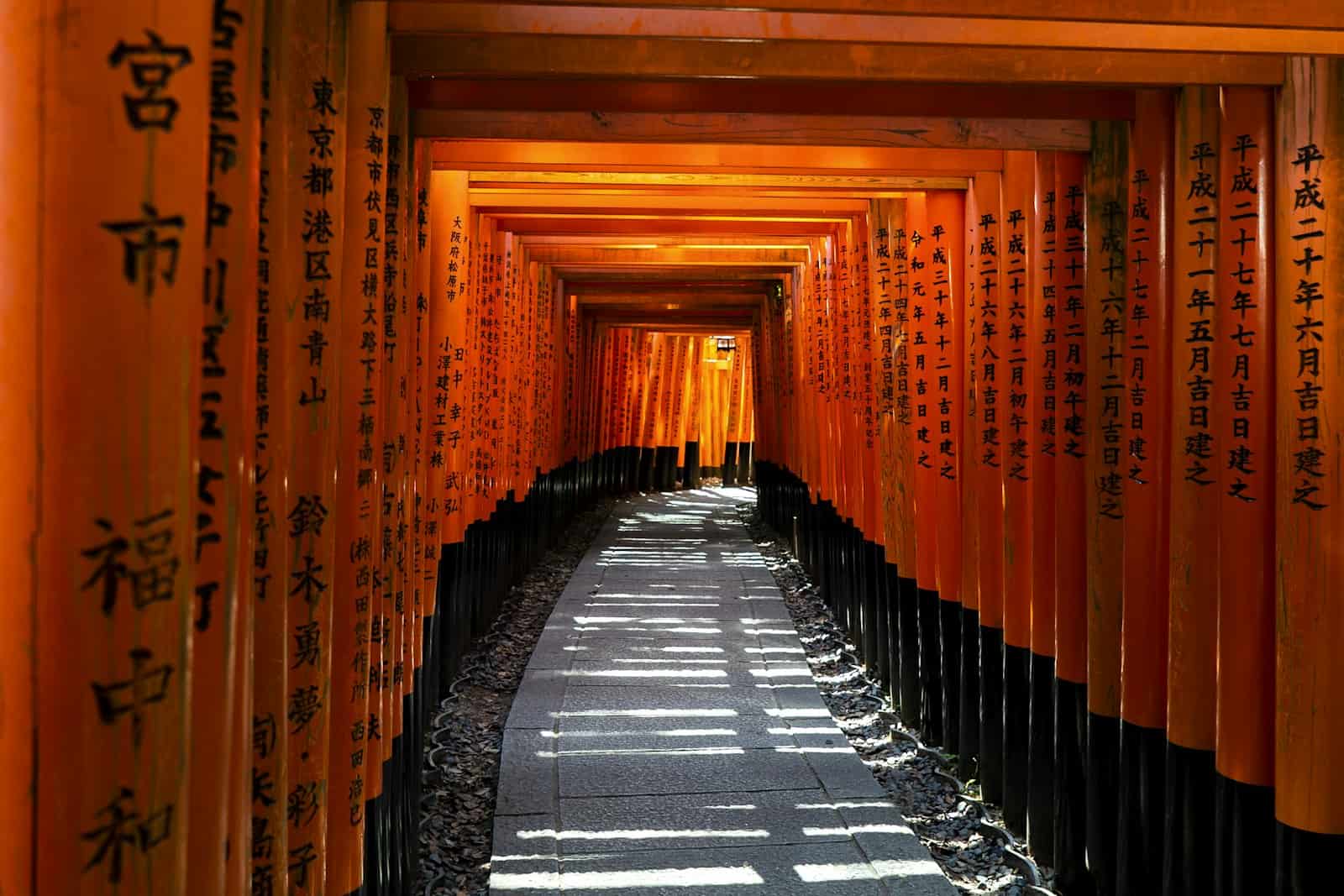
Fushimi Inari is the head shrine of Inari, the Shinto god of rice and prosperity. It dates back to 711. Thousands of bright vermilion torii gates line the trails up Mt Inari. Each gate was donated by a business or family. Start early, before the crowds, and walk at least to the Yotsutsuji viewpoint.
Kinkaku-ji, the Golden Pavilion
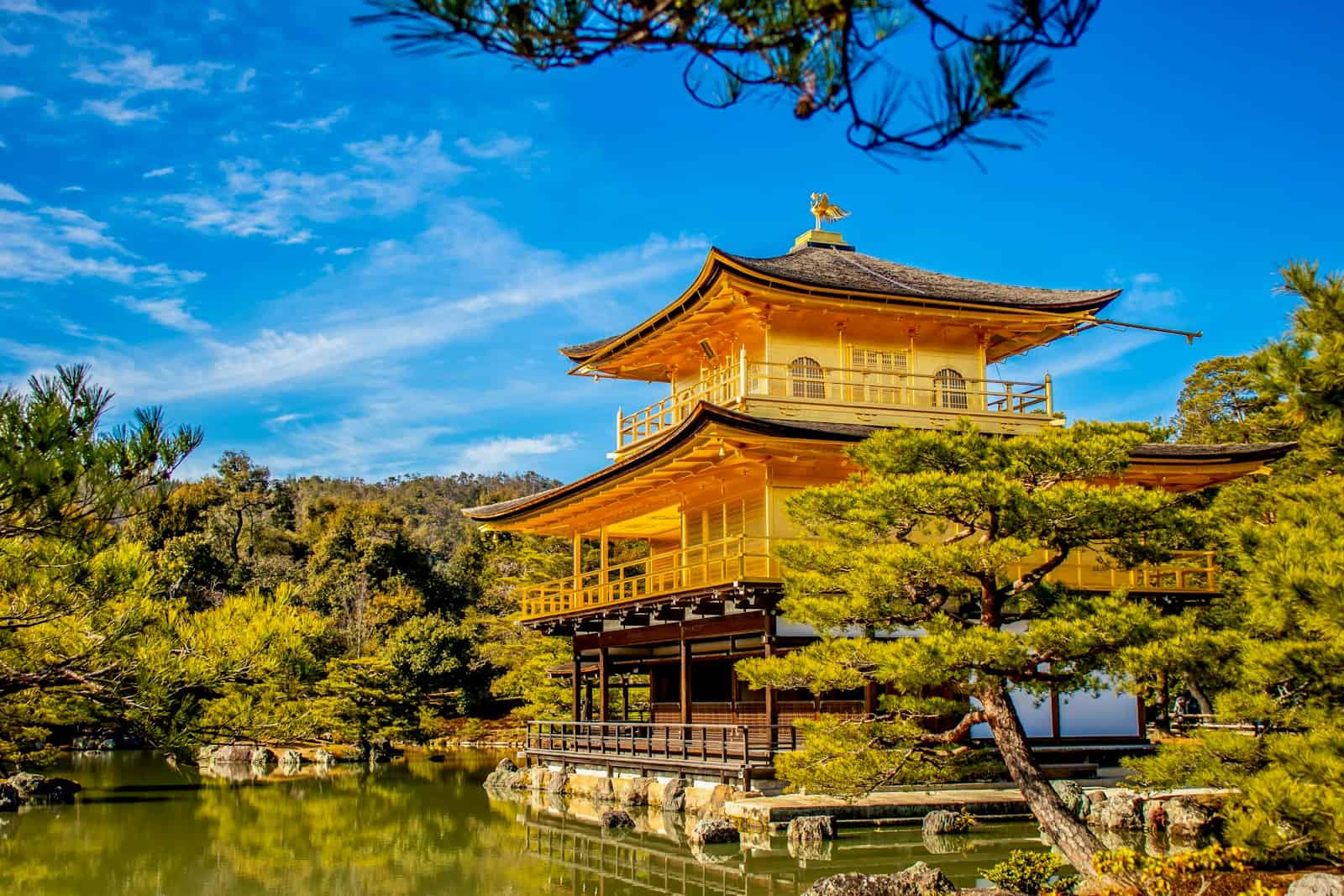
Kinkaku-ji began as the retirement villa of shogun Ashikaga Yoshimitsu. After his death in 1408, it became a Zen temple. The top two floors are covered in gold leaf. The original burned in 1950, and the present pavilion is a faithful 1955 reconstruction.
Ginkaku-ji and the Philosopher’s Path
Ginkaku-ji, the Silver Pavilion, was built in the late 1400s by shogun Ashikaga Yoshimasa. In fact, it was never covered in silver. Its moss garden and raked sand cone are quieter than the Golden Pavilion. From here, the Philosopher’s Path follows a canal south, lined with cherry trees.
Ryoan-ji
Ryoan-ji holds Japan’s most famous Zen rock garden. Fifteen stones sit on raked white gravel. However, from any seat on the veranda, you can only see fourteen at once. The garden invites quiet reflection rather than explanation.
Tenryu-ji and Arashiyama
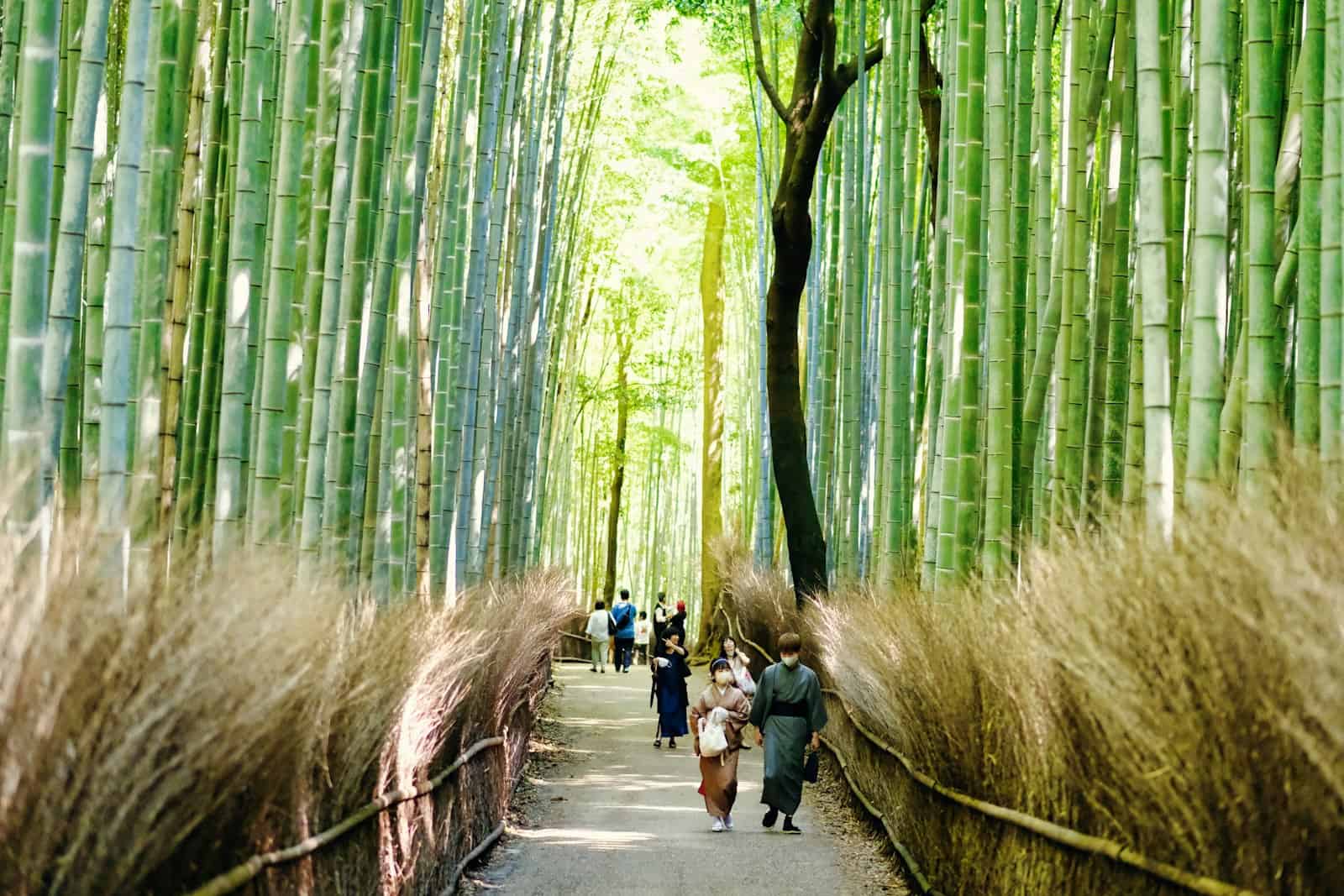
Tenryu-ji was founded in 1339 and is a UNESCO site. Its garden uses the hills behind it as borrowed scenery. Next to it, the Arashiyama bamboo grove is one of Kyoto’s most photographed places. Visit early in the morning for the calmest walk.
Castles, palaces and museums
Nijo Castle
Tokugawa Ieyasu built Nijo Castle in 1603 as his Kyoto residence. Its Ninomaru Palace has painted screens and “nightingale floors” that chirp when someone walks on them. In 1867, the last shogun returned power to the emperor here.
Kyoto Imperial Palace
The Kyoto Imperial Palace was the emperor’s home until 1868. Its grounds and gardens are open to visitors. Nearby, Katsura and Shugakuin imperial villas have some of Japan’s finest gardens, with visits arranged in advance.
Kyoto National Museum
The Kyoto National Museum opened in 1897. It holds Buddhist art, painted scrolls, ceramics and textiles from Kyoto’s temples and noble families. Its exhibitions change regularly, so check what is on display.
Kyoto districts to explore
- Gion: Kyoto’s most famous geiko district, with wooden teahouses along Hanamikoji Street.
- Higashiyama: stone lanes such as Ninenzaka and Sannenzaka between Kiyomizu-dera and Yasaka Shrine.
- Pontocho: a narrow lane of restaurants beside the Kamo River, with summer riverside terraces.
- Arashiyama: the bamboo grove, Togetsukyo Bridge and boat trips on the river.
- Northern Higashiyama: Ginkaku-ji, the Philosopher’s Path and Nanzen-ji.
Please note that photography of geiko and maiko without permission is not allowed. Some private lanes in Gion also ban photos.
Food to try in Kyoto
- Kaiseki: an elegant multi-course meal built around the season.
- Yudofu: simple simmered tofu, a tradition near Nanzen-ji and Arashiyama.
- Shojin ryori: Buddhist vegetarian cuisine, served in temple settings.
- Nishiki Market: a covered market street known as “Kyoto’s kitchen”, with pickles, sweets and snacks.
- Matcha and wagashi: green tea with seasonal sweets, best enjoyed at a tea ceremony.
Where to stay in Kyoto
Most visitors stay near Kyoto Station or in central Kyoto around Shijo and Karasuma. Kyoto Station suits travelers with day trips planned. Meanwhile, Gion and Higashiyama offer atmosphere and walkable evenings. For a special night, a traditional ryokan adds kaiseki dinner and tatami rooms.
Getting around Kyoto
Kyoto’s buses reach most sights, but they are often crowded. Instead, combine subways, trains and short taxi rides. For groups, a private coach saves a lot of time between Arashiyama, Kinkaku-ji and the eastern temples.
Sample three-day Kyoto itinerary
Day 1: Eastern Kyoto
Start at Kiyomizu-dera early. Then walk down Ninenzaka and Sannenzaka to Yasaka Shrine. In the evening, stroll through Gion.
Day 2: Gold and stone
Visit Kinkaku-ji first, then Ryoan-ji. After lunch, tour Nijo Castle. Finally, browse Nishiki Market.
Day 3: Gates and bamboo
Walk Fushimi Inari at sunrise. Next, head to Arashiyama for Tenryu-ji and the bamboo grove. End with a boat ride or riverside dinner.
Want Kyoto as a private or group program? We add guides, temple experiences, tea ceremonies and reserved transport. Request a quote and we will reply within 24 hours.
Kyoto travel FAQ
How many days do you need in Kyoto?
Three days covers the main temples and districts. Four or five days allows day trips to Nara or Uji.
Why was Kyoto the capital of Japan?
Emperor Kanmu founded the city as Heian-kyo in 794. It remained the imperial capital until 1868, when the emperor moved to Tokyo.
What is the oldest temple in Kyoto?
Kiyomizu-dera, founded in 778, is among the oldest. Several temples in Kyoto trace their origins to the 700s and 800s.
Can you see geiko in Kyoto?
Yes, in districts such as Gion and Pontocho, especially in the early evening. Please never photograph them without permission.
When is the best time to visit Kyoto?
Late March to early April for cherry blossoms, and mid-November to early December for autumn leaves. Both are busy, so book early.
Plan your Kyoto trip
Private trips, group tours, school programs and incentives. Tell us your dates and ideas, and we will reply within 24 hours.